
I Found Termites. Should I Spray Them?
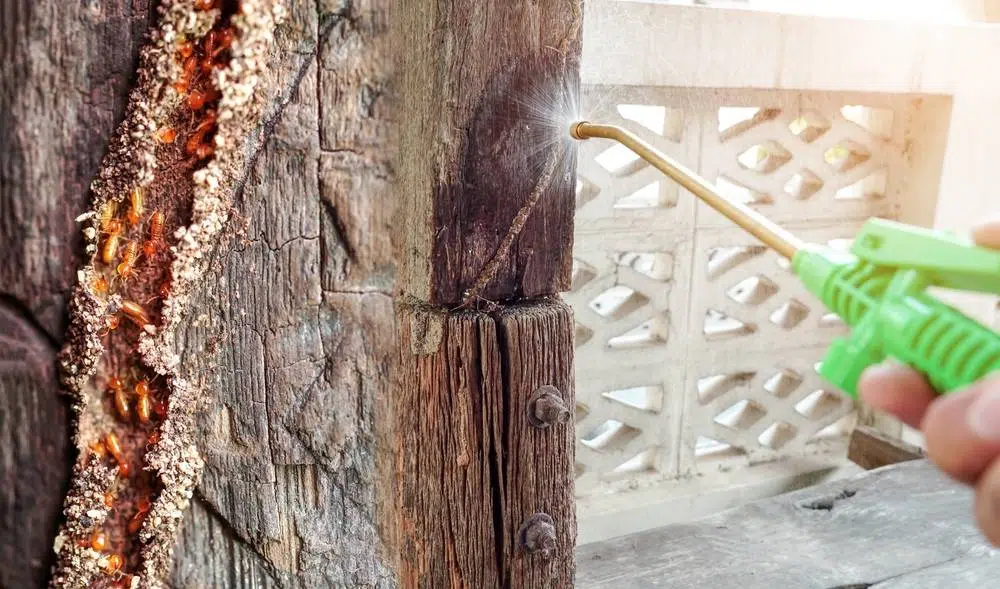
The urge to kill termites where they stand is the most natural reaction there is. In more than 25 years of inspecting homes across Sydney, I’ve opened countless skirting boards and wall linings after a homeowner discovered termites. I’ve lost count of how many times I’ve arrived only to be told, “I sprayed them before you got here”.
Spraying the termites you can see only kills the workers in front of you. The colony that sent them is somewhere else, often many metres away, and it can quickly replace those workers. More importantly, disturbing active termites can cause them to abandon that area and continue feeding elsewhere in the building, making it harder for a professional to locate and eliminate the colony. Leaving the activity undisturbed gives your termite technician the best chance of identifying the source of the infestation and choosing the most effective treatment.
Key Takeaways
- Do not spray, poke, vacuum, burn, or break open active termites. Leave them exactly as you found them.
- Spraying only kills the workers you can see.. Workers are replaceable. The colony and its queen are somewhere else entirely.
- Professional termite treatments rely on termites remaining active so they can transfer the treatment back through the colony.
- If you’ve already sprayed or disturbed the termites, tell your technician exactly what you did, where you did it, and what product you used.
What Actually Happens When You Spray Termites
What you are looking at is not the colony. It is a feeding party.
Workers are the most numerous caste in a termite colony. They do the food gathering and rarely emerge from the nest or its tunnels, because their thin skin dries out so easily. The nest itself may be underground, in a stump, at the base of a tree, or under a neighbouring yard. The termites in your architrave travelled there along a covered tunnel, and they were always going home again.
Kill the workers you can see and the colony simply replaces them. To solve the problem, the colony itself needs to be eliminated or brought under control.
Then there is the larger problem, which is that most retail surface sprays are repellent. Termites detect the treated timber and route around it. They seal off the workings you disturbed and give up on that section entirely. That means when a pest control technician visits your home, the visible activity may have disappeared, making it much more difficult to identify the active workings, determine the extent of the infestation, and select the most effective treatment.
3 Reasons You Shouldn’t Spray Termites Yourself
The Colony Survives
DIY sprays usually kill only the termites you can see. The vast majority of the colony remains underground, where the queen, soldiers and most workers are unaffected. Eliminating a handful of foraging termites has little impact on the colony itself.
You Destroy the Evidence
Undisturbed termite workings provide valuable information. They help a technician identify the termite species, assess the extent of the visible activity, and determine the most appropriate treatment. Once the workings have been sprayed or disturbed, much of that information is lost.
You Reduce the Chance of Eliminating the Colony
Many modern termite treatments rely on active termites continuing to feed naturally. As termites move through the colony, they can transfer certain professional termiticides to other termites, helping suppress or eliminate the colony.
What People Reach For, and Why Each One Fails
The most common methods people try to use to kill termites are not effective:
- Fly spray and aerosol insecticide: Kills only the termites it hits. The rest of the colony remains unaffected.
- Retail surface spray: Most kill only the termites that contact the treated surface. They do not eliminate the colony and can disrupt normal termite activity.
- Foggers and bombs: They cannot penetrate timber, soil or wall cavities, where the colony lives and feeds.
- Petrol, diesel, and process oil: These are dangerous, ineffective and can contaminate the soil, making future professional treatment more difficult.
- Vinegar, boiling water, and other kitchen remedies: They kill the ones you pour them on. The colony survives.
- Vacuuming them up: Removes valuable evidence without addressing the colony.
- Breaking open the mud tubes or the damaged timber to see how bad it is: It rarely tells you anything useful. Instead, it disturbs the termites, destroys valuable evidence and can make professional treatment more difficult.
The best thing you can do when you find termites is leave them undisturbed and arrange a professional inspection. Termite control is a job that isn’t worth doing yourself.
You Have More Time Than You Think

Termites do their damage over months and years. The hollow timber you just found took a long time to get that way.
Waiting two or three days for a licensed termite technician is unlikely to make a meaningful difference. Spraying, flooding or disturbing the termites in the next 20 minutes can.
What to Do Instead
- Stop: Put the spray down, stop prodding, and do not open the timber or mud workings any further.
- Cover what you have already opened: If you have pulled a board off or broken through, rest it back in place. Do not seal it, and do not scrape, vacuum, or clean anything out.
- Photograph it: Take a few clear photos, but don’t move anything to get a better angle.
- Write down what you know: Note where you found the termites, what they were feeding on, and whether you noticed any nearby leaks, dampness or timber in contact with the soil.
- Book a licensed termite inspection: Choose a licensed technician with experience in termite inspections and treatments.
- Leave everything alone until they arrive: That includes anything outside. If what you found is termites in a garden bed or fence, the same rule applies to it.
What a Professional Does Differently
A technician treats the colony, not the termites in the wall. That starts with identifying the termite species and assessing the extent of the infestation. Australia has more than 350 termite species, but only a relatively small number are responsible for damaging buildings.
From there, the live termite activity becomes an asset rather than a problem. Depending on the situation, a technician may install termite bait or apply a professional termiticide that termites cannot detect. As they continue feeding naturally, they can transfer the treatment through the colony. That’s why undisturbed termite activity is worth protecting.
Another issue to consider is entry. Termites reach a building through some entry point that must be fixed. This could be a moisture problem or a barrier bridged by garden beds, paving, or stored timber. Correcting the entry point helps reduce the risk of future termite activity.
For more information on termite prevention, find out what a termite barrier actually does.
What if I Have Already Sprayed Them?
The main thing is not to compound it by spraying again.
Tell the technician exactly what you used, where you applied it, and when. It genuinely changes what they can do and where they will start looking.
Expect the visible activity to have changed. The inspection may take longer than it otherwise would have, and the termites may not reappear at the original feeding site for days or even weeks if even at all. Leave the damaged timber where it is and do not remove or repair anything until it has been inspected.
Frequently Asked Questions
Does Fly Spray Kill Termites?
Fly spray can kill the termites you hit. However, it won’t affect the overall colony. Fly spray kills on contact and does nothing beyond the timber surface, so while the workers you can see may die, the colony that sent them remains unaffected. The termites may already be feeding at other locations you can’t see, and by disturbing the only visible feeding point, you may lose the best opportunity to treat the colony without invasive work.
What Happens if You Disturb Termites?
Disturbing termites often causes them to abandon the feeding point you’ve found. The colony usually survives and may continue feeding from another location that is no longer visible. The original feeding point that could have helped guide treatment may also be lost.
How Do You Actually Kill Termites?
Professional termite treatments target the colony rather than just the termites you can see. Depending on the situation, this may involve baiting systems or non-repellent termiticides that termites continue to move through naturally. The aim is to affect the colony, not just the visible workers.
Can I Buy Termite Spray?
You can buy insecticides labelled for termites over the counter, but they are unlikely to resolve an active termite infestation in a building. Most kill only the termites they contact and do not eliminate the colony. They can also disturb normal termite activity, making the infestation more difficult to assess and treat.
Does Vinegar Kill Termites?
It kills the termites you pour it on, but doesn’t accomplish anything else. Vinegar does not travel back through a colony, reach a nest metres away, or penetrate timber or soil. Pouring it into workings also disturbs them, which makes the activity harder to locate later.
Do Ants Kill Termites?
Some ant species do prey on termites. It will not save your house. Termite colonies maintain a soldier caste to defend against attackers. Ant predation is not a control method.
What Should I Do if I Find Termites?
Leave them completely alone and book a licensed inspection. Do not spray, prod, vacuum, or open anything up further. Photograph what you can see, note the location and whether anything nearby is damp, and cover any board you have lifted without sealing it.
Should I Break Open the Mud Tubes to See How Bad It Is?
No. Mud tubes are valuable evidence. Breaking them open disturbs the termites and may remove an important treatment point. It also won’t tell you how bad the damage is, because most termite damage occurs inside timber you can’t see.
How Long Can I Wait Before Getting an Inspection?
It’s best to book an inspection as soon as possible. The sooner a technician begins a professional treatment plan, the better.
Written by Liam Milligan, licensed pest technician. 25 years in Sydney pest management.
Back to all guides