
What Attracts Silverfish to Your Home?
Encountering a silverfish infestation and wondering what caused it? Or keen to ensure you never face one in the future?
In this guide, we’ll explain what attracts silverfish, why some homes are far more susceptible than others, and the practical steps you can take to make your home less attractive to them.
Key Takeaways
- Silverfish are usually a moisture problem before they are a food problem.
- They feed on starches and cellulose found in paper, books, wallpaper paste, cardboard, cotton, linen and even some dried foods.
- Silverfish can survive many months without food – and under favourable conditions, close to a year – provided moisture is available.
- They do not bite and they do not spread disease. However, they can damage books, important documents, photographs, wallpaper, clothing and other natural fibres.
- Bathrooms, laundries, kitchens, subfloors, roof voids and damp storage areas such as garages provide ideal conditions for silverfish.
- Reducing moisture through ventilation, repairing leaks and using extraction fans is usually more effective for long-term control than simply spraying insects.
What Really Attracts Silverfish?
While silverfish feed on starches and cellulose, these are not what usually causes an infestation. Paper, cardboard, cotton and the starches found in wallpaper paste and plasterboard joint compounds are present in almost every Sydney home, yet most homes never develop a silverfish problem.
The deciding factor is moisture. Silverfish don’t need standing water to survive. Household silverfish can absorb moisture directly from humid air, allowing them to live in places where water isn’t visible. This is one of the main reasons they thrive in bathrooms, laundries, subfloors, roof voids and other damp parts of a home.
You could remove every book from a damp room and still have silverfish. Besides paper products, they also feed on dust, shed skin cells, hair, natural fibres and tiny amounts of starch found throughout the home. Remove the moisture, however, and you’ve taken away the condition they rely on most.
I have crawled through a lot of Sydney subfloors over 25 years, and the pattern is remarkably consistent. Dry, well-ventilated subfloors rarely contain silverfish. Damp, poorly ventilated subfloors with elevated humidity often do.
What Silverfish Actually Eat

Silverfish feed primarily on starches and cellulose, which are found throughout most homes. Common food sources include paper, cardboard, books, wallpaper paste, photographs, newspaper, and the adhesives used in many paper products.
They also feed on natural fibres. Cotton, linen and rayon clothing are all susceptible, particularly if stored in damp or humid conditions.
Dry pantry foods are another food source. Flour, cereals, oats, pet food and other dry goods stored in unsealed containers can attract silverfish.
Silverfish also feed on house dust, shed human skin and hair. In short, food is rarely the limiting factor. Humidity is what usually determines whether silverfish become established.
Where They Come From and How They Get In
Silverfish can be introduced from outside the home. Moving boxes stored in a damp garage, second-hand books, cardboard cartons, stored paperwork and furniture kept in humid conditions can all carry silverfish or their eggs into a property.
Most silverfish are already living in or around the building. They thrive in damp subfloors, roof voids, wall cavities and other hidden areas before gradually spreading into living spaces.
They enter rooms through surprisingly small openings. Gaps around plumbing, cracks in walls, poorly sealed thresholds, service penetrations, weep holes and ceiling penetrations all provide pathways between concealed areas of the home.
Once inside, silverfish reproduce relatively slowly compared with many household pests, giving homeowners a good opportunity to bring them under control before numbers become severe.
Where They Live in a Sydney Home
Naturally, silverfish are attracted to the most humid parts of your home:
- Bathrooms and laundries with no extraction fan, or a fan venting into the roof space rather than outside.
- Unventilated or poorly drained subfloors, especially in older Sydney homes where vents have been paved against, buried by garden beds, blocked by stored items or where drainage is poor.
- Roof voids, where warm, humid air and condensation create ideal conditions, particularly around poorly insulated ceilings, roof leaks or bathroom exhausts venting into the roof space.
- Wall cavities, especially around leaking plumbing, bathrooms and kitchens where moisture may go unnoticed.
- Garages and storage areas, particularly cardboard boxes, stored books, paperwork and clothing kept in damp conditions.
- Wardrobes, cupboards and bookshelves positioned against cold external walls, where condensation can form behind stored items with little air movement.
- Kitchens and pantries, particularly beneath sinks, behind dishwashers and refrigerators, or anywhere affected by slow plumbing leaks.
Baby Silverfish, Eggs, and What They Look Like
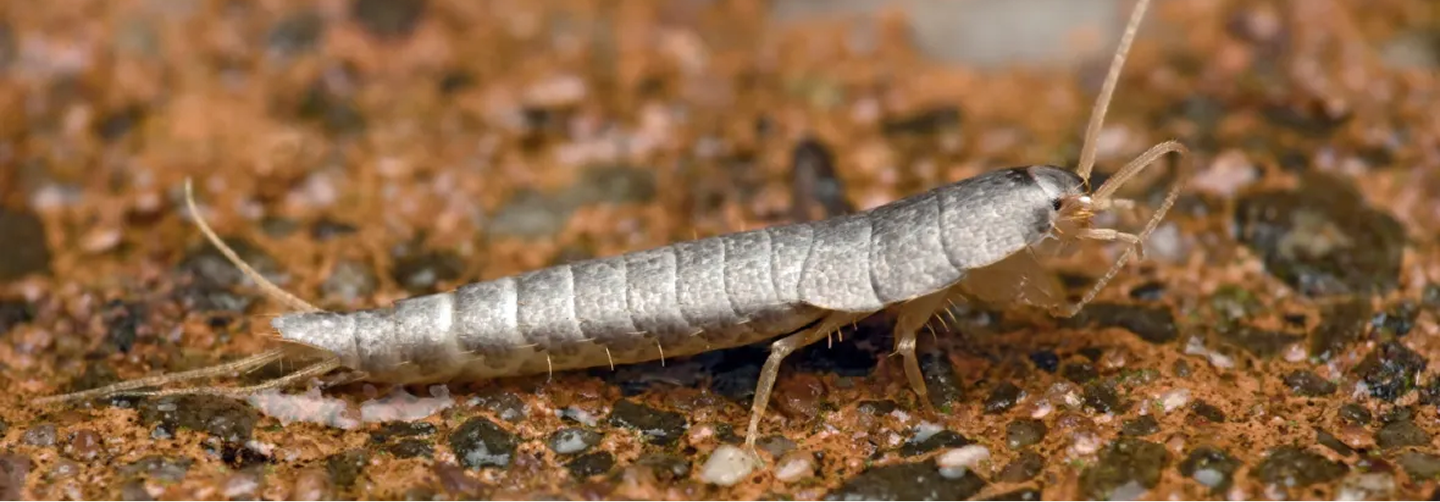
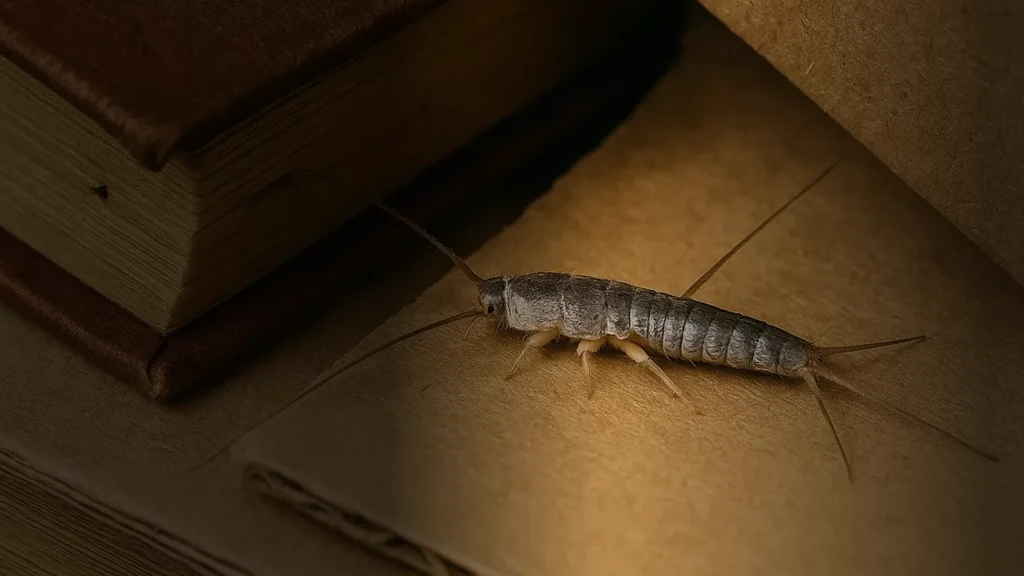
Adult silverfish are typically 10 to 15 millimetres long, with a flattened, carrot-shaped body covered in fine silver-grey scales. They have long antennae at the front and three distinctive tail-like bristles at the rear. The common household species in Australia is a grey silverfish, Ctenolepisma longicaudatum.
Baby silverfish are miniature versions of the adults. They hatch from the egg looking pale or almost white, then gradually darken and develop their silvery scales as they moult and mature. Unlike beetle larvae or fly maggots, they are not grub-like. They lay eggs in hidden cracks and crevices, behind skirting boards, inside wall cavities, beneath flooring, and between the pages or bindings of undisturbed books and stored paper products. Because the eggs are tiny and well concealed, they are rarely seen by homeowners.
Silverfish continue to moult throughout their lives, even after reaching adulthood. As a result, shed skins are often one of the earliest signs of an infestation, along with small feeding damage, yellow staining, or tiny black pepper-like droppings in cupboards, bookshelves and storage areas.
Are Silverfish Harmful?
Silverfish do not bite, sting or inject venom. Their mouthparts are designed for scraping soft materials such as paper, starches and natural fibres, not biting people or pets. They are not known to spread disease.
What they do is cause is slow, cumulative damage to household items. In the event of a silverfish infestation, you may notice:
- Irregular holes and grazed patches in clothing made from cotton, linen and other natural fibres.
- Surface etching and yellow staining on paper.
- Nibbled edges on wallpaper and photographs.
- Damage to stored keepsakes, artwork and archival materials over time
For most households, silverfish are a nuisance and a slow-moving property risk, rather than a health risk.
What Actually Gets Rid of Silverfish
The good news is that there’s plenty of anti-silverfish measures worth doing yourself:
- Ventilation first: Ensure you have a working extraction fan in the bathroom and laundry, ducted to outside air, and not into the roof void. Run it during the shower and afterwards, and open a window in the laundry.
- Fix moisture problems: Repair leaking taps, pipes and shower recesses, clear blocked gutters, fix overflowing hot water systems, and ensure air conditioner condensate drains discharge away from the building.
- Ventilate the subfloor: Clear every vent. Pull mulch, soil, and paving back below the vent line so air can actually move through. Address poor drainage to keep the subfloor as dry as possible.
- Reduce damp storage: Store books, paperwork, clothing and other susceptible items in sealed plastic containers rather than cardboard boxes, particularly in garages, subfloors and roof spaces.
- Reduce harbourage: Declutter cupboards, wardrobes and storage areas, and regularly vacuum behind furniture, skirting boards and shelving where silverfish prefer to hide.
- Treatment: A targeted crack and crevice application using low-toxicity products, placed into the harbourage where silverfish actually live and travel. In combination with preventative measures, you can secure your home against future infestation.
The Bigger Signal
A silverfish infestation is often a sign that parts of your home are consistently damp. Unfortunately, damp conditions don’t just attract silverfish—they also create the ideal environment for more destructive pests, including subterranean termites.
That means dealing with these issues won’t just help control silverfish – it will also reduce the conditions that make your property more attractive to termites.
When It Is Worth Getting a Professional
Professional pest control technicians are highly valuable in managing silverfish problems. If silverfish are already wreaking havoc on cherished household items, professional treatment can quickly reduce the population and minimise further damage.
Improving ventilation and addressing moisture problems are excellent first steps. However, if silverfish persist despite these changes, or you want faster results, it’s worth contacting a professional pest control technician.
Frequently Asked Questions
What Attracts Silverfish to a Bedroom?
Humidity, dark crevices, and natural fibres. Bedrooms hold moisture overnight from breathing, and wardrobes on cold external walls develop condensation behind stored clothing. With cotton and linen in drawers, a bedroom supplies everything a silverfish needs.
Do Silverfish Bite?
No. Silverfish cannot bite people or pets. Their mouthparts are built for grazing on starch and cellulose, they carry no venom, and they avoid contact.
Are Silverfish Harmful to Humans?
No. Silverfish do not bite, sting, or transmit disease. They can harm property, including paper, book bindings, wallpaper, photographs, and natural-fibre clothing.
Where Do Silverfish Come From?
Most silverfish are already living in or around the building, particularly in damp subfloors, roof voids, wall cavities and other concealed areas. They can also be introduced in damp cardboard boxes, stored books, paperwork and second-hand items, but most infestations develop because the home provides the humid conditions they need to survive.
Do Silverfish Eat Clothes?
Yes, silverfish eat natural fibres including clothes. They’ll happily eat cotton, linen, and rayon, especially when starched or stored in slightly damp, humid conditions. The damage is irregular surface holes and grazed patches, rather than the clean holes clothes moths leave. Synthetic fabrics are usually ignored unless they contain food stains, perspiration or blended natural fibres.
Does Seeing One Silverfish Mean I Have an Infestation?
One silverfish often doesn’t indicate a full-blown infestation. A single silverfish in a sink or bathtub often indicates one insect searching for moisture that became trapped on the smooth surface. Silverfish build numbers slowly. Repeated sightings in one room, or shed skins collecting in a cupboard, are the more significant signs.
Do Silverfish Mean My House Is Dirty?
No. Silverfish are attracted to humidity, not hygiene. I have found large populations in spotless homes with damp subfloors or poor ventilation, and none at all in cluttered homes that were dry and well ventilated. Moisture is far more important than cleanliness.
How Long Do Silverfish Live?
Silverfish are long-lived by household-insect standards, with adults commonly living around 3 years, moulting throughout. Development from egg to adult can itself take months to years depending on warmth and humidity.Silverfish can be introduced from outside the home. Moving boxes stored in a damp garage, second-hand books, cardboard cartons, stored paperwork and furniture kept in humid conditions can all carry silverfish or their eggs into a property.
Written by Liam Milligan, licensed pest technician. 25 years in Sydney pest management.
Back to all guides